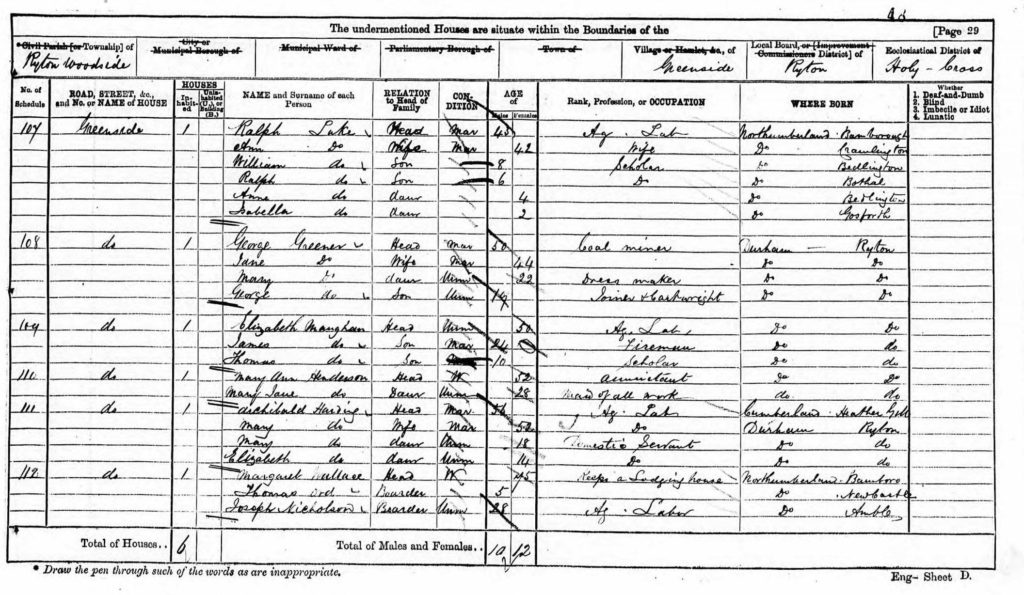
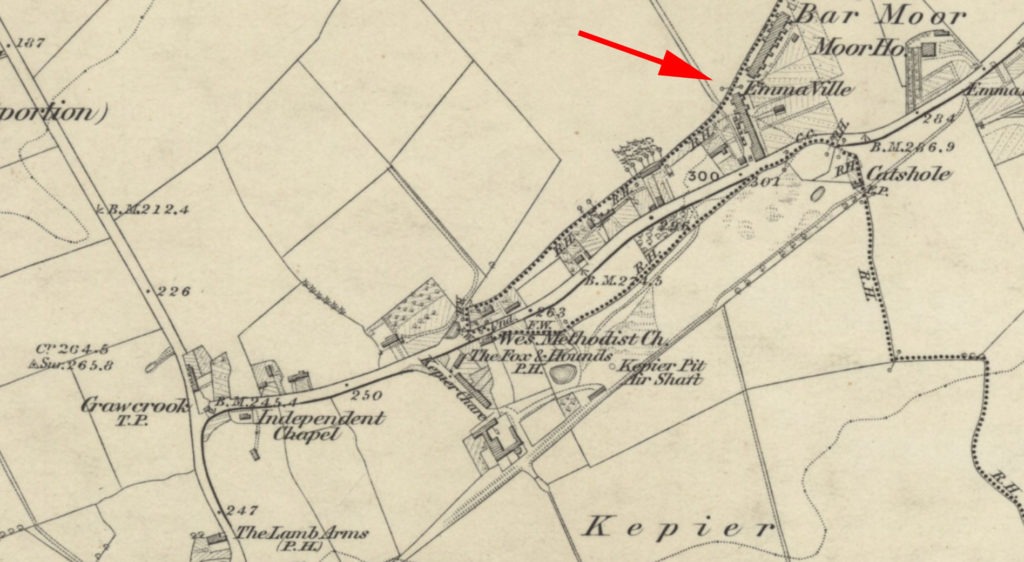
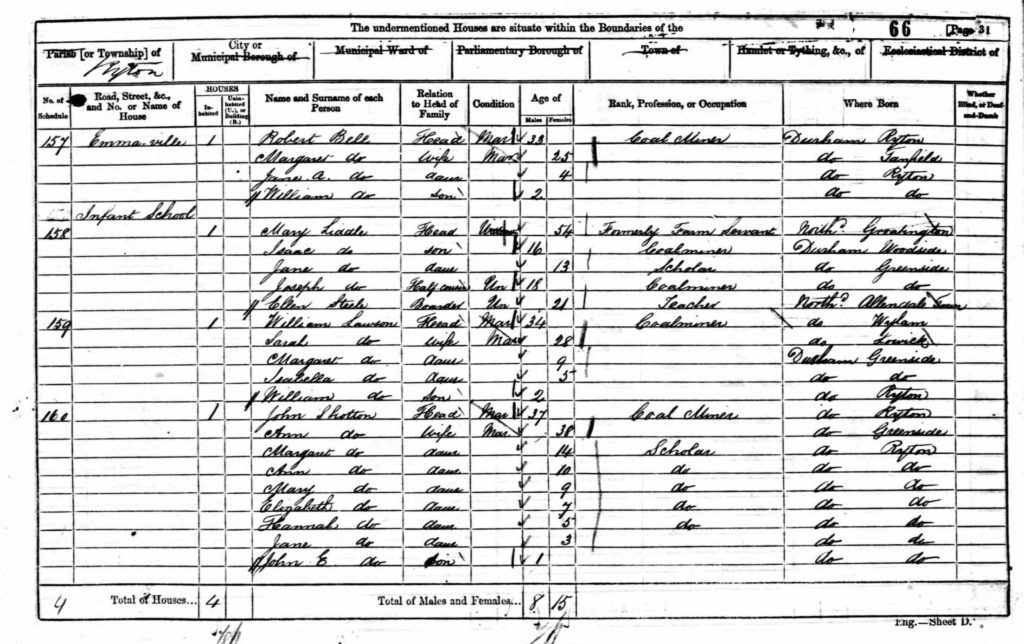
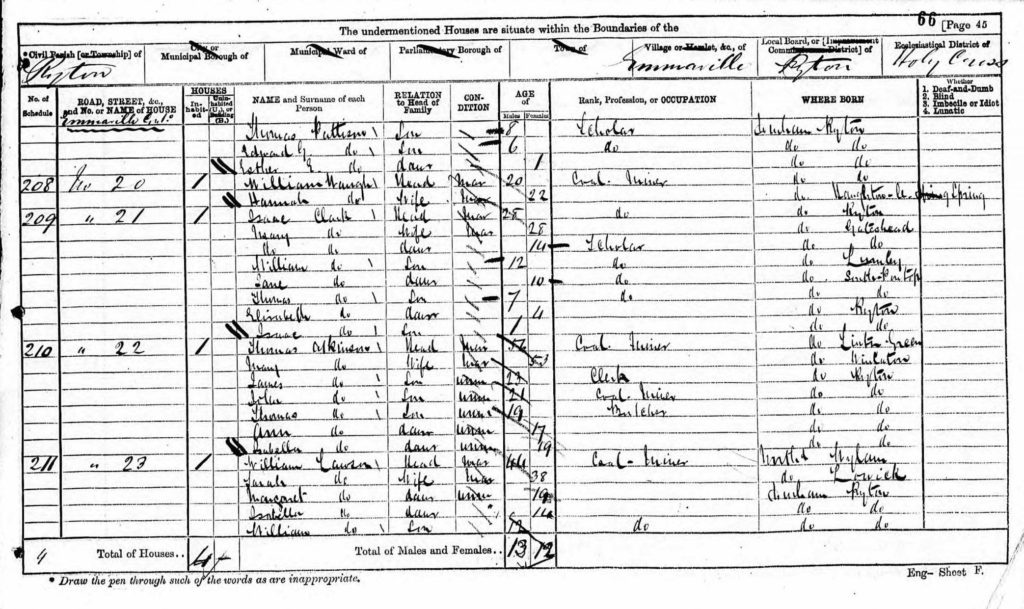
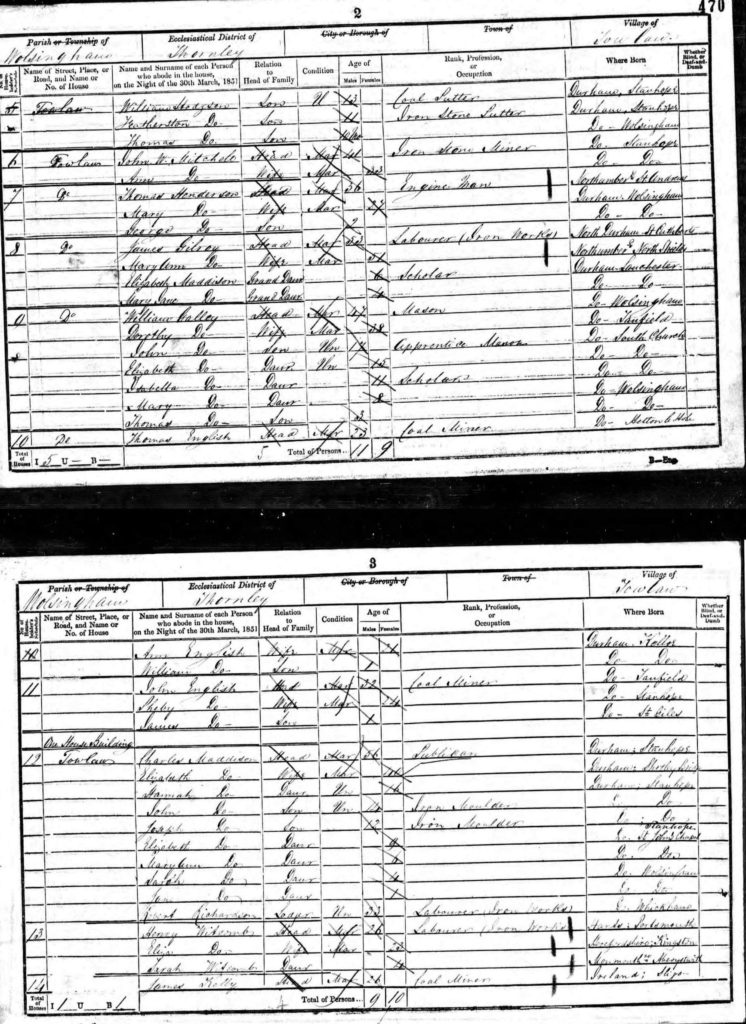
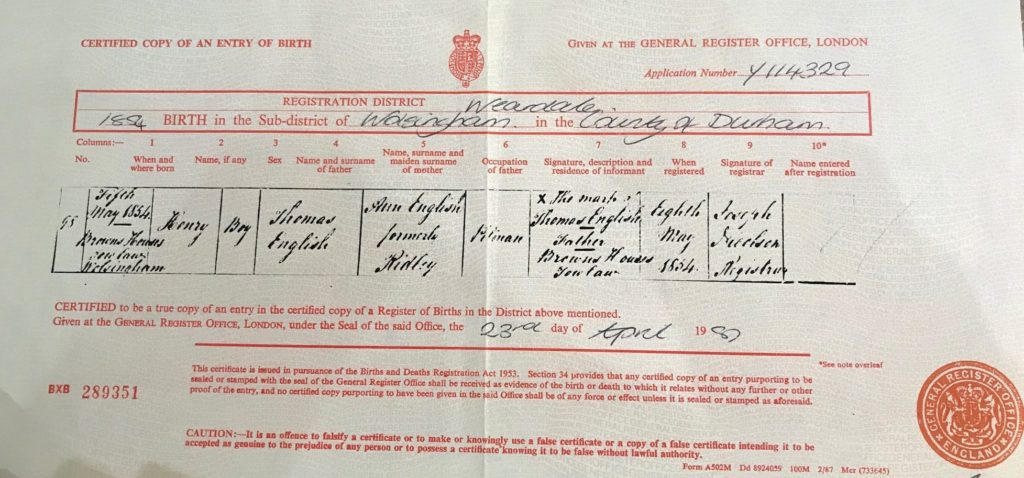
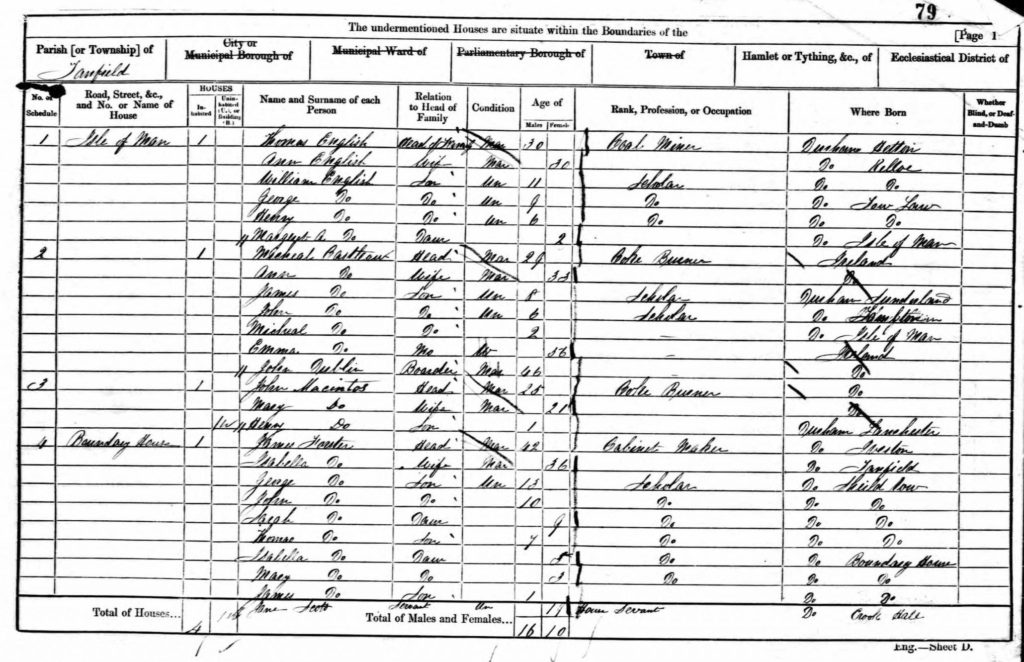
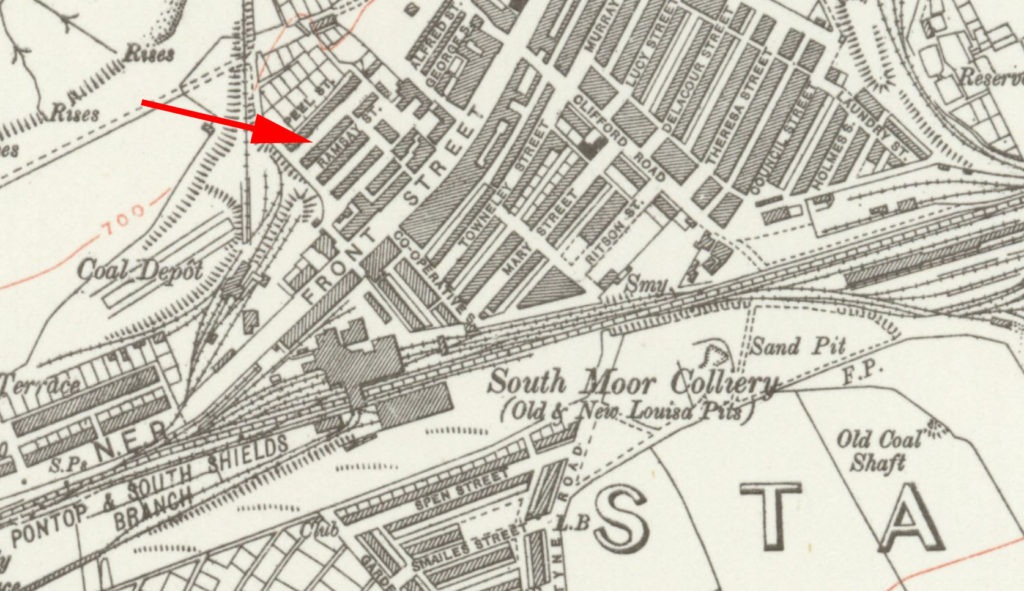
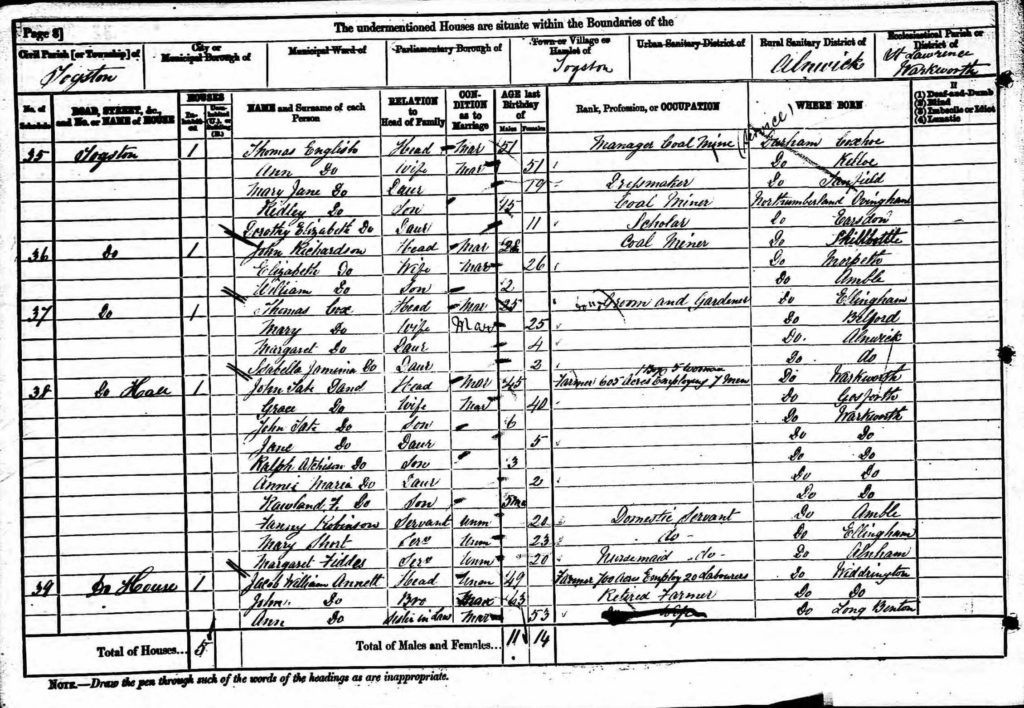
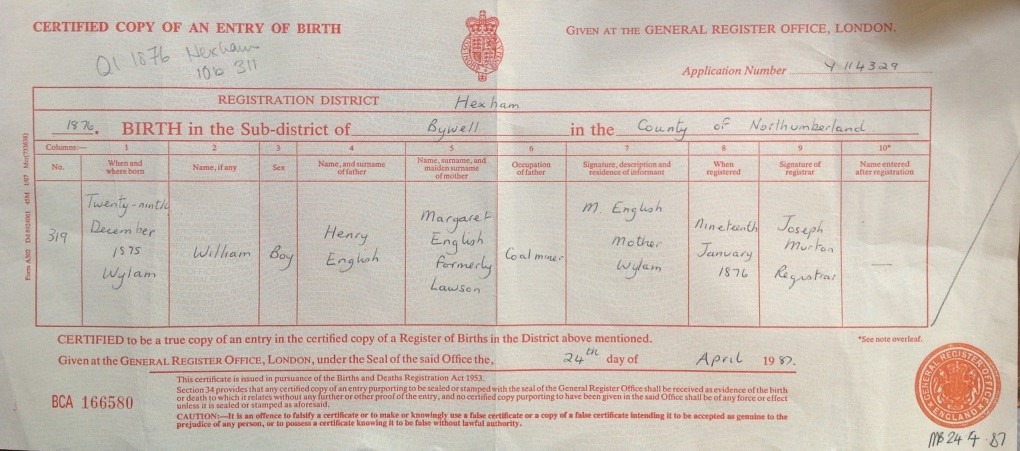
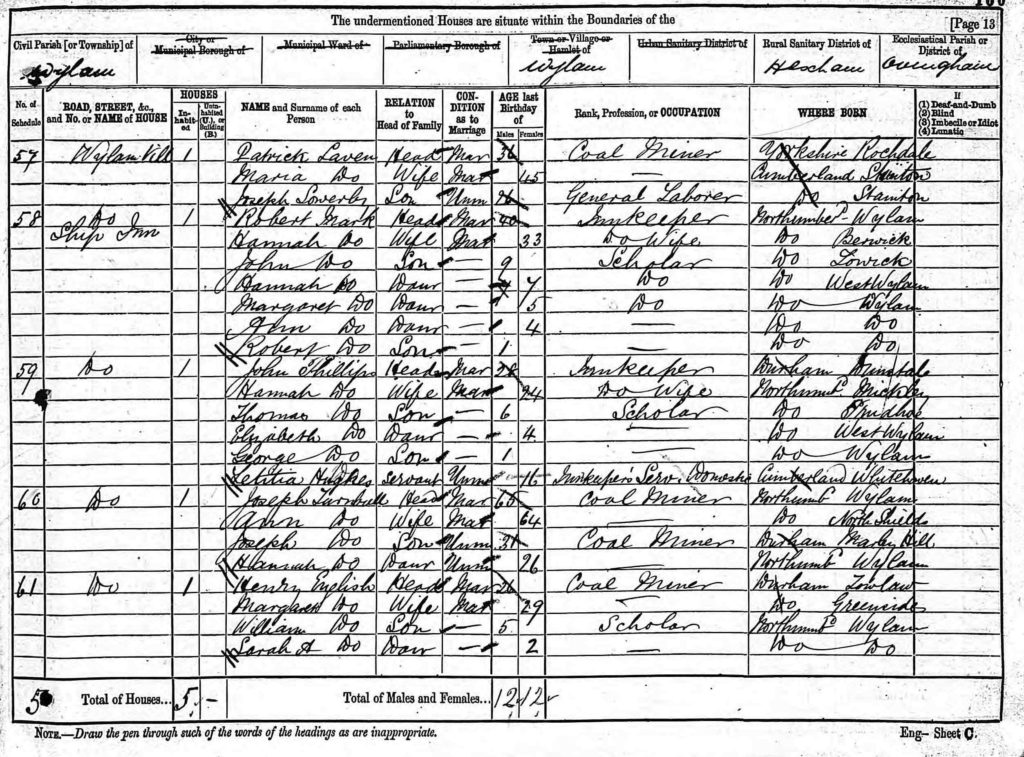
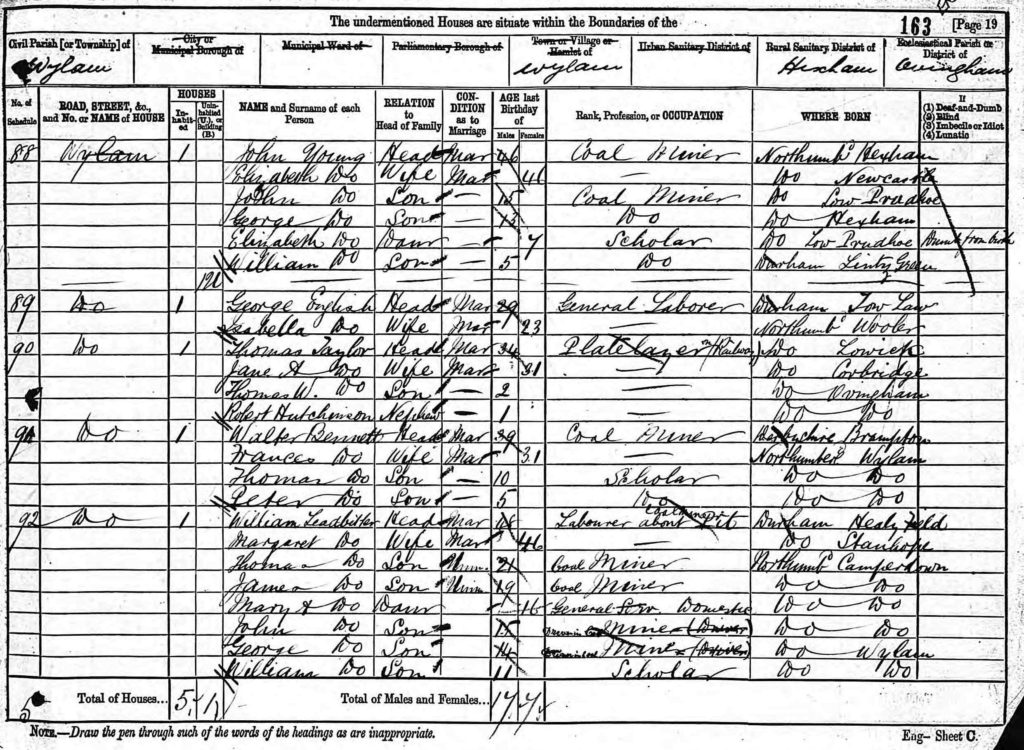
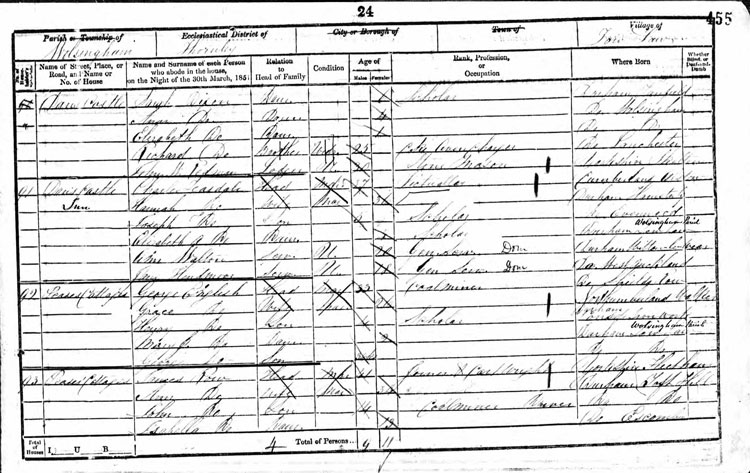
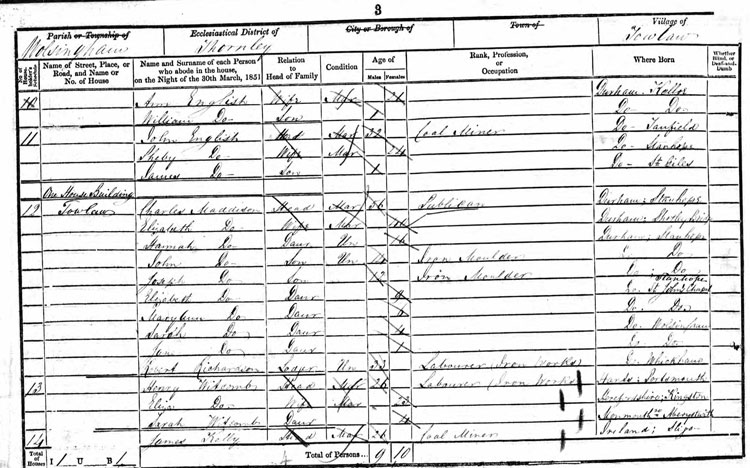
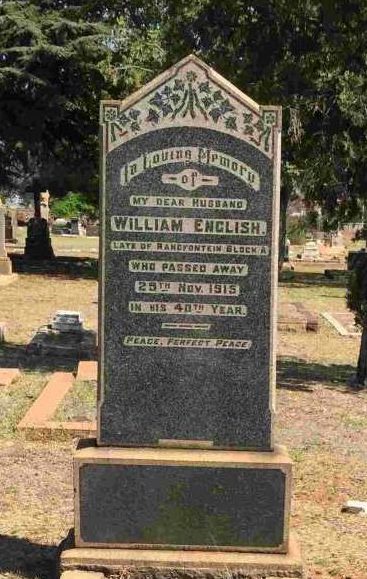
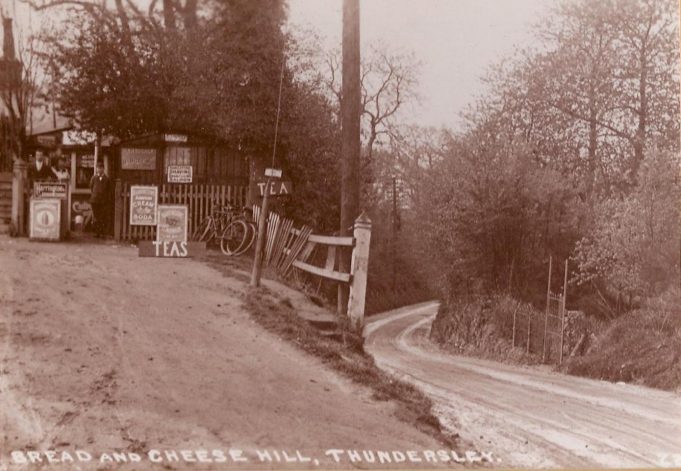
Listed below are all the references to Henry made in the Journal before Henry’s marriage in 1899.
PAGE 2
Centenary medals of the great Engineer, with his head on one side, and ‘the first engine that ever pulled a passenger train’ on the other, were sold, one of which came into my possession, I suppose through my father; which is still in my possession.
Many stories have been told to me by my father, which were related to him by a Miss Jackson, who was very, very old, and who tidied the reading room for her living; several of which related to George Stevenson in his young days.
W_a_g_-at-t-wa’; [Wag at the wall. Uncased clocks usually of wood sold by itinerant pedlars] well after being oiled a few times with the hair oil it got gummed up, so my father proceeded in the usual way then in vogue, to boil it; but what was his dismay when he lifted off the pan lid, to find many dozens of pieces floating on the top of the water; the whole clock was made of wood, but so cleverly varnished, or lacquered over that the whole thing looked like metal. I remember this clock quite well.
[WILLIAM and his father were mistaken in thinking it would have been made of metal.]
PAGE 4
Jackson also constructed a most wonderful clock, which, from information I received in 1906 from one of the masters at the Wylam School, is still in Wylam Hall, and working. My father saw this clock, which was ^is about the same ^the size of a Grandfather clock; about 1873; it stood on the first landing of the grand staircase of the Hall. He looked through the glass in front, but all he could see was a chain running down one side and up the other; there was no pendulum, and no sound came from the clock; the face was the same as a grandfather clock.
The pointers commenced to move, but no sound came from it, and it has been moving ever since, over 80 years, for I remember my father saying it had been going for 40 years when he saw it.
Jackson. He had almost completed a large model, on a base about six feet by six feet, as near as my father could recollect; when he died.
PAGE 5
My father told me that when he saw the model it was covered carefully with a tarpaulin in the loft above the stables. Mr Atkinson Senior was very careful in the protection of this model. One of the flunkeys moved the cover to let my father see it, but to him it appeared a maze of cylinders, cogwheels, cranks and rods; and, not being a mechanic, he had no knowledge
PAGE 6
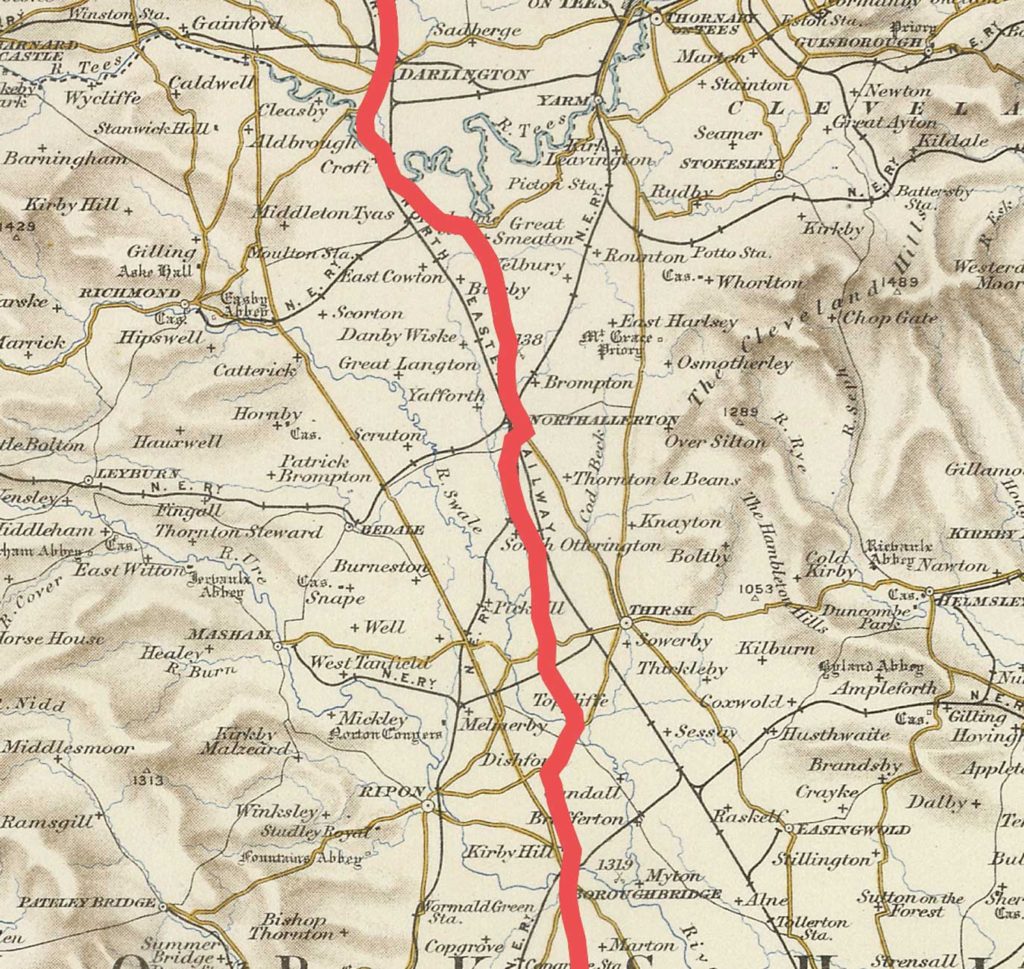
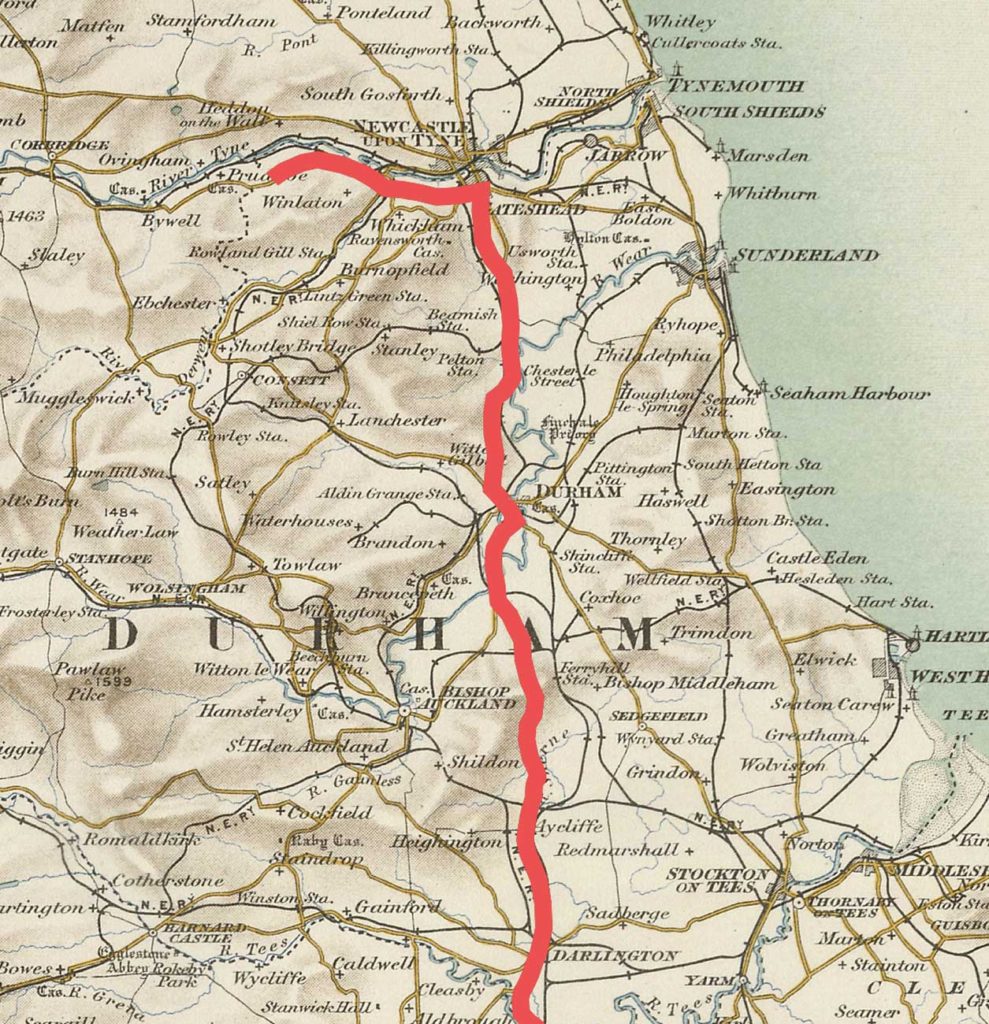
We lived at the top end of Victoria Road, close to the Sunderland Road, and my father worked at Whitburn, near to Marsden. He started sinking the famous shaft that was finally sunk by the [blank]* process, as a huge gully was struck that let in large volumes of water from the sea. We stayed here for two years and then moved to Chevington Abbas, a farm, whilst my father worked at Stobswood, a mine on the main line north. ^The winters of 1885 and 86 were terrible, snow being level with the hedges, and railways blocked. We lived here a couple of months and then moved to Stobswood; but only stayed a year all told, and moved to Pegswood. My father worked at Ashington, Pegswood not working at the time.
Ashington as a trapper at one shilling a day. After working a week, I didn’t like the mine, and wanted to leave, but my father said I had looked for the job myself and would now stay there.
PAGE 7
…my best friend my mother died at 40 years of age in 1892 January, she is buried at Bothal. We then moved to Seghill for a year, where we did drifting in stone. Then to Ravensworth in the Co Durham where we did sinking and rising in stone.
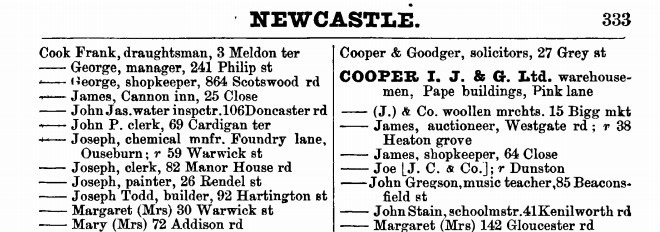
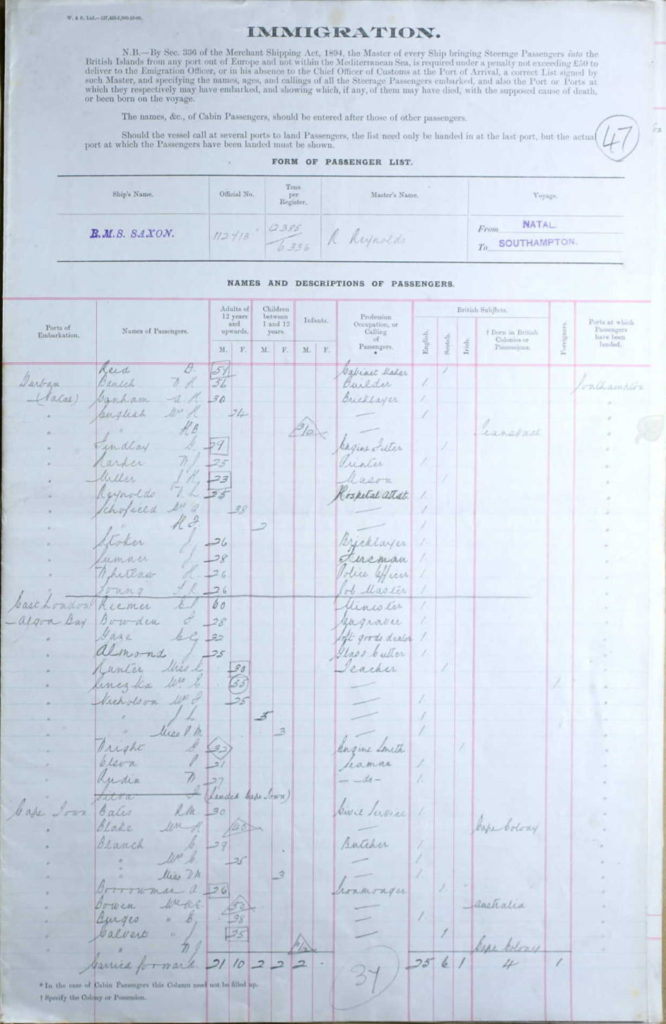
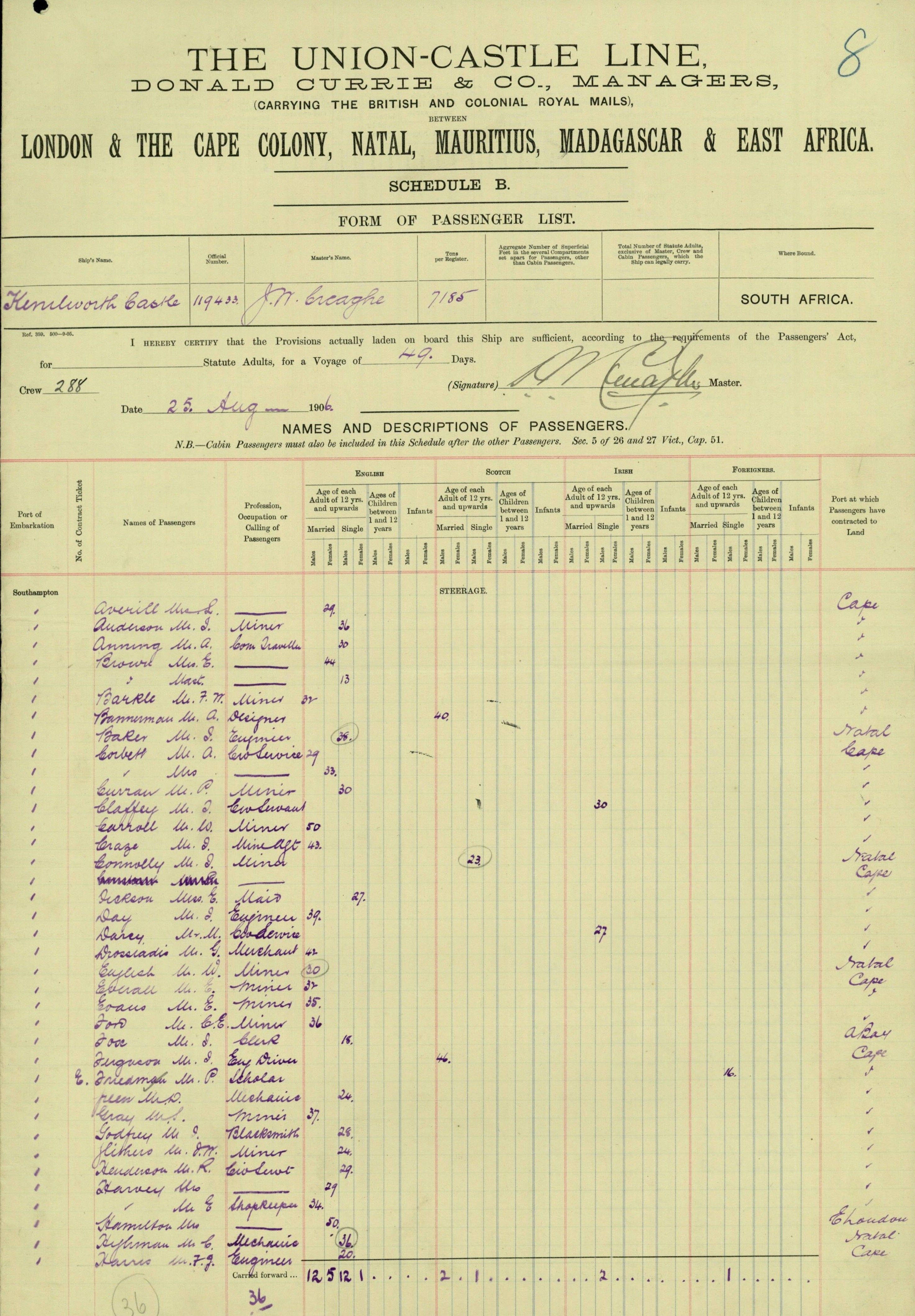
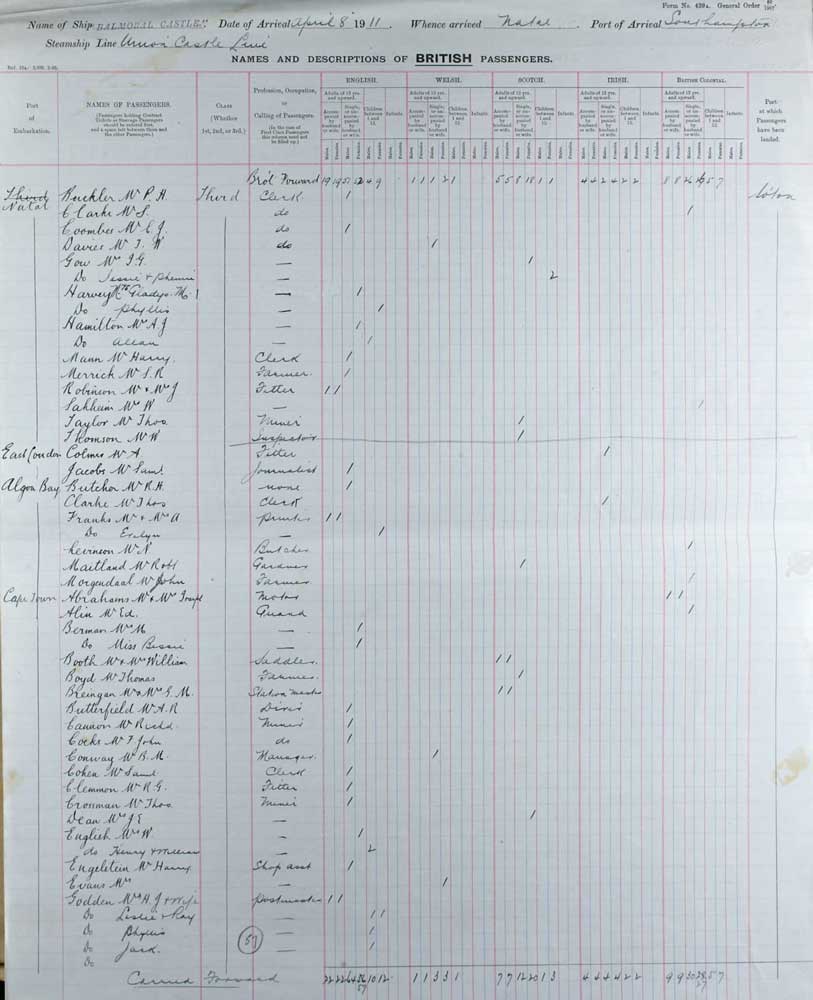
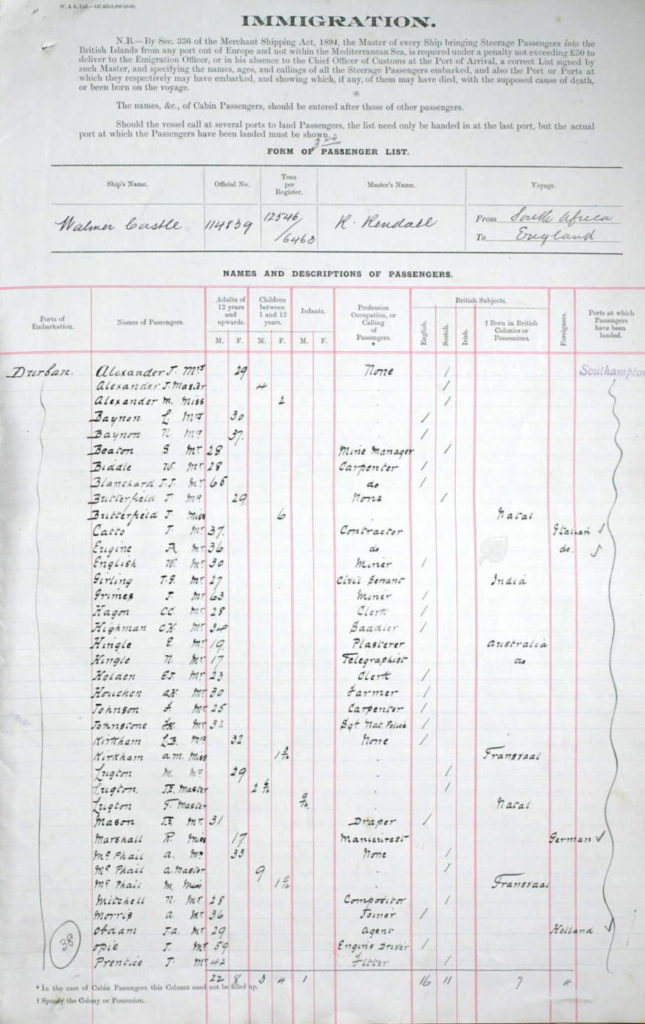
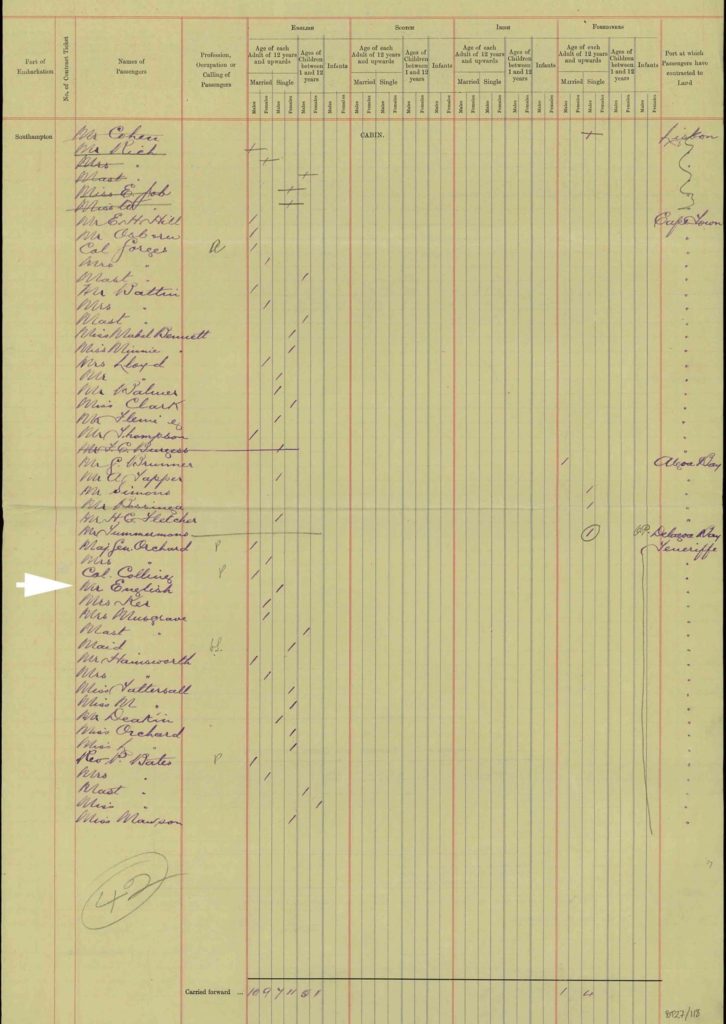
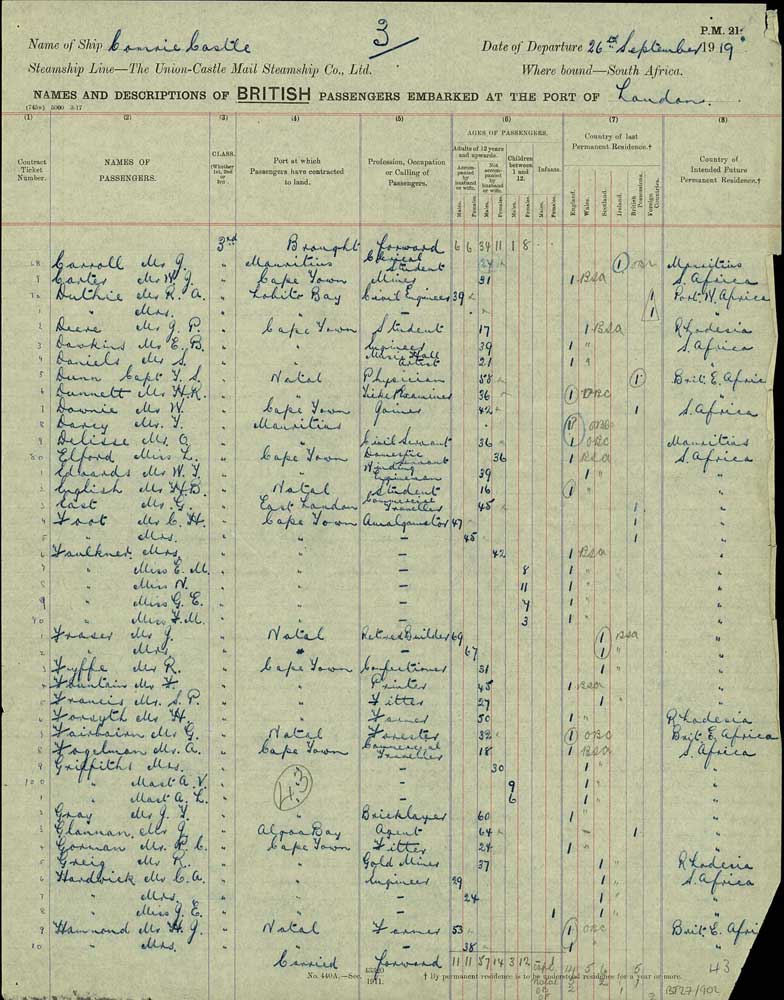
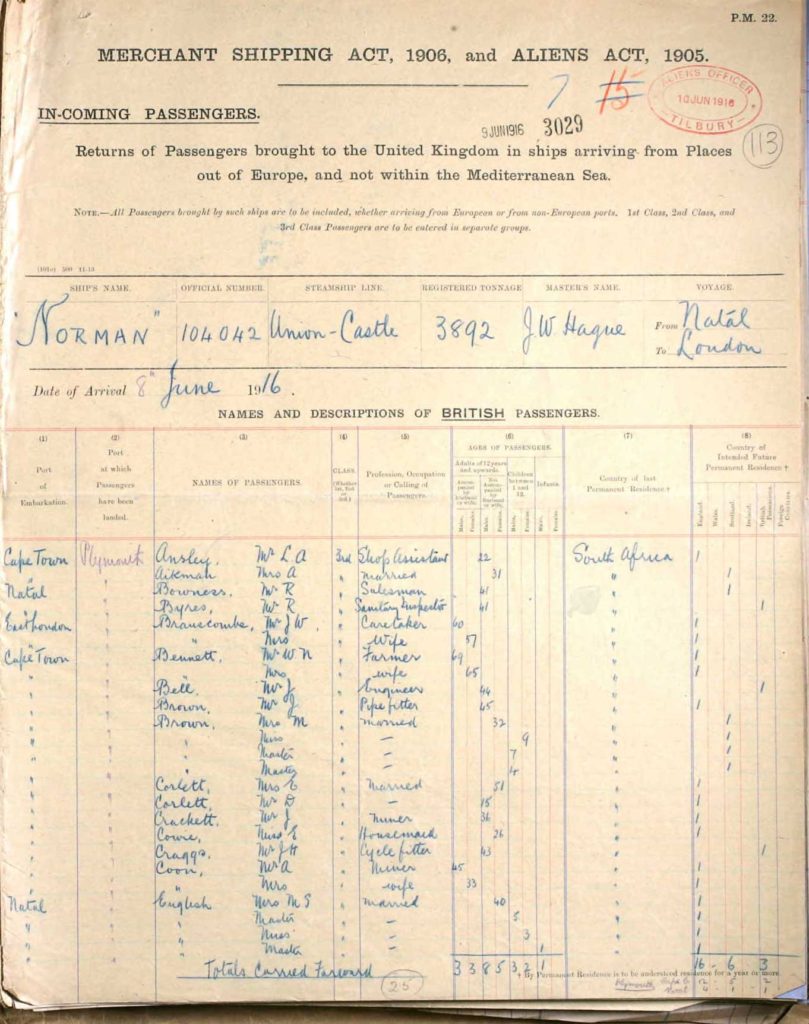
An H English travels to South Africa via Teneriffe in December 1892. It is possible this is Henry but there is no mention of it in the Journal. Between 1892 and 1896 when he finally leaves for South Africa there are several other possible sailings by either an H or Mr English. He may have visited more than once.
‘We lived at Gateshead’ suggests Henry is there, however ‘I moved to the Spen’ (1893) may mean that Henry was on his travels.
PAGE 11
In 1895 my father signed on to go to South Africa to the mines in Rhodesia, but before he got away news came of the Jameson Raid into the Transvaal; then comment was rife that these men were being signed on to join Jameson instead of going to the mines. My father said that Earl Grey had something to do with it.
Well early in 1896 he went off to the Transvaal, and early in 1897 he sent for me.
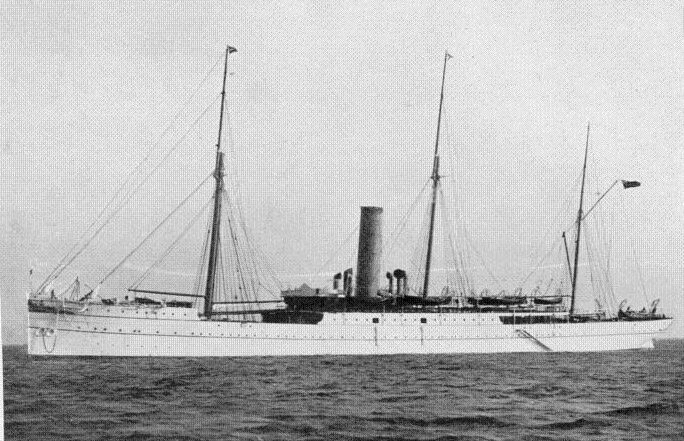
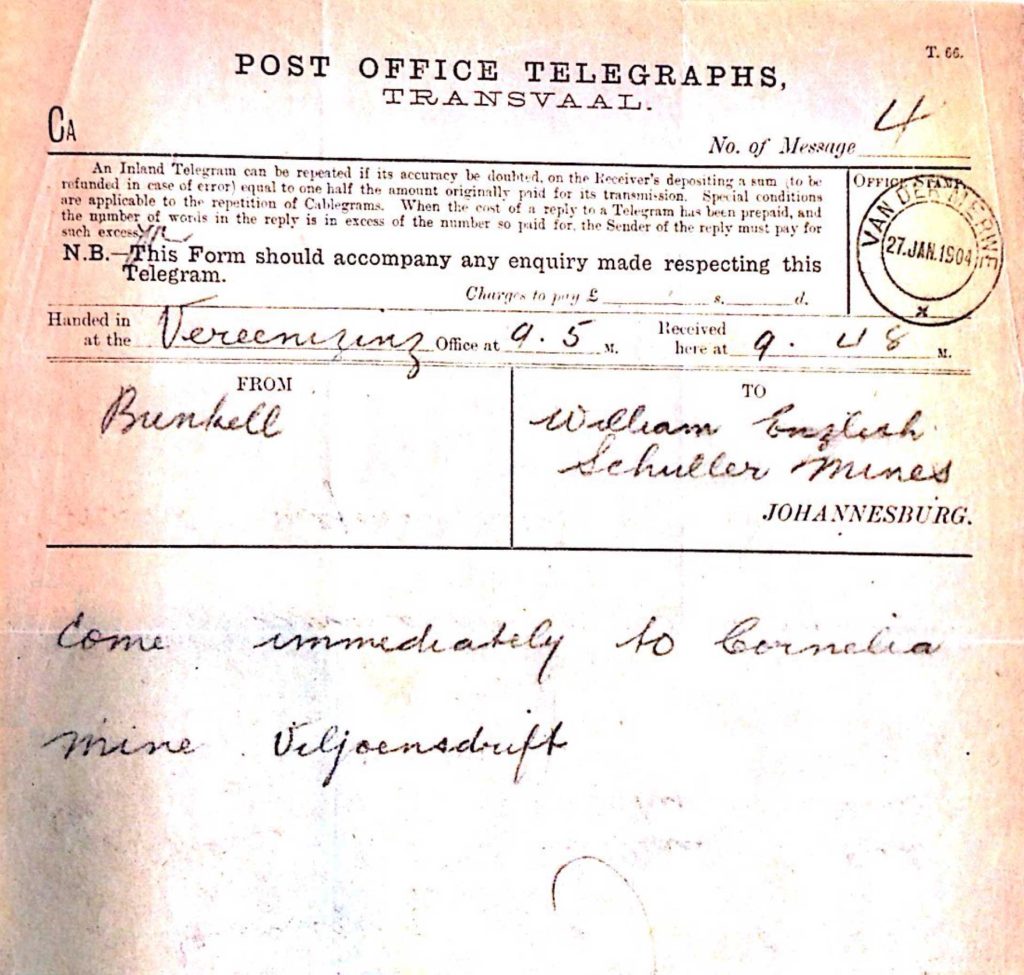
9th May 1896 Mr H English a miner sails from Southampton to the Cape on board the Athenian. To date no sailing in 1897 has been found for WILLIAM although the Journal tells us he sailed from Southampton on the Union Boat Athenium, 22nd February 1897
PAGE 12
1897
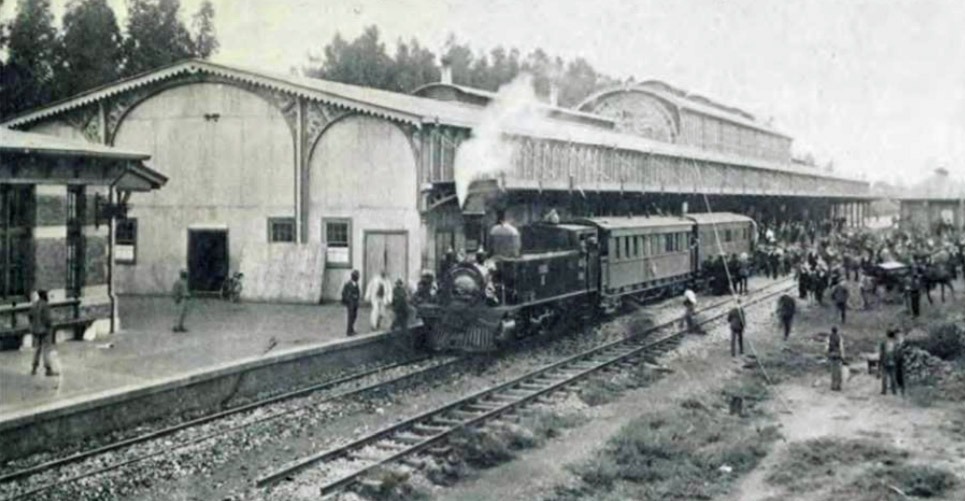
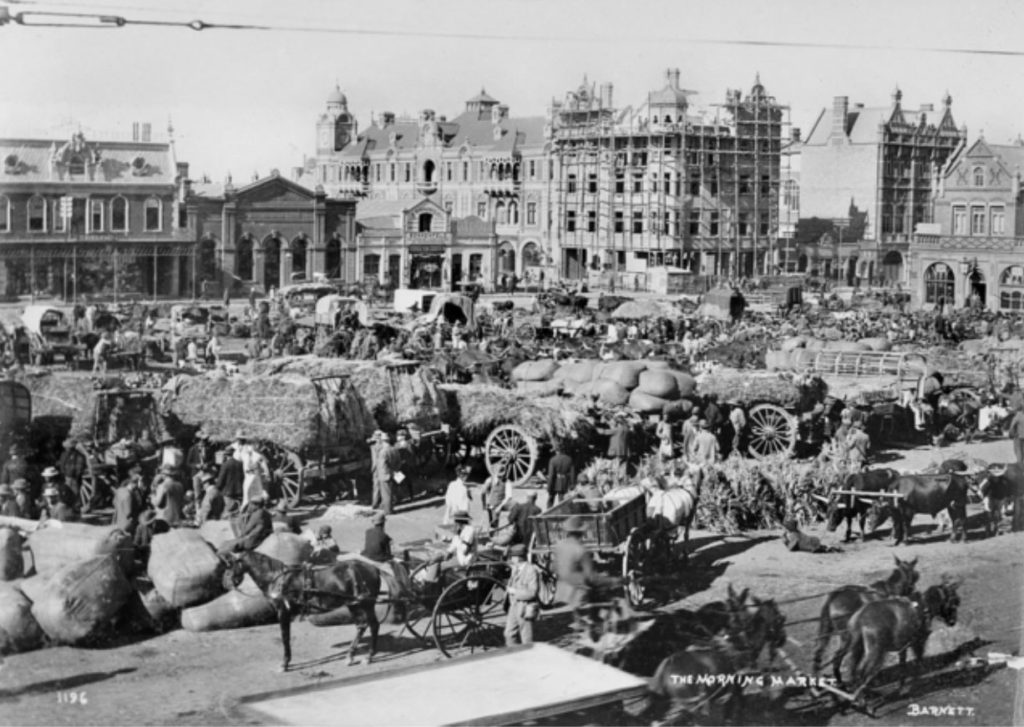
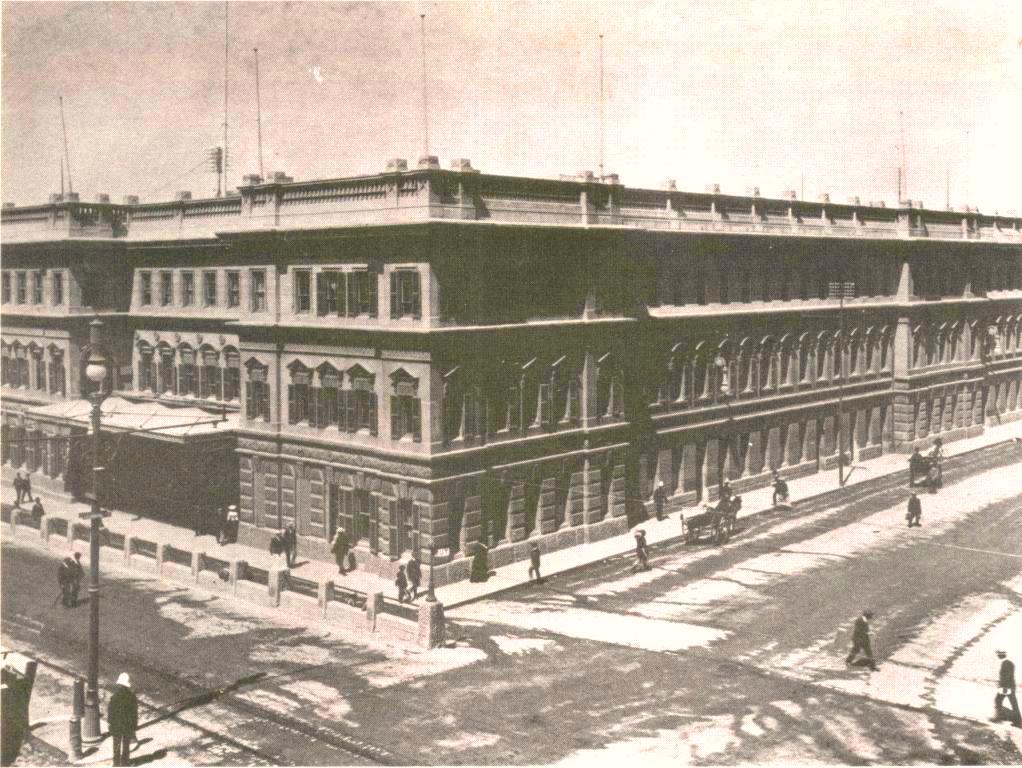
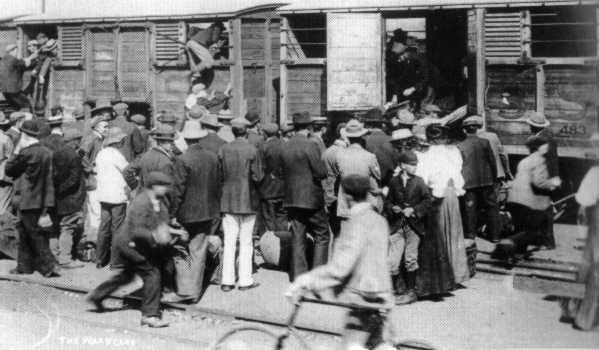
I arrived at Johannesburg Park Station on March 17th 1897, glad to get off that train. My father was there to meet me also a friend of his.
as it was then called, and my father called for three English beers; I saw him put six shillings on the counter and didn’t see him take any change back, so asked him the reason why, and he said the three glasses of beer cost two shillings each.
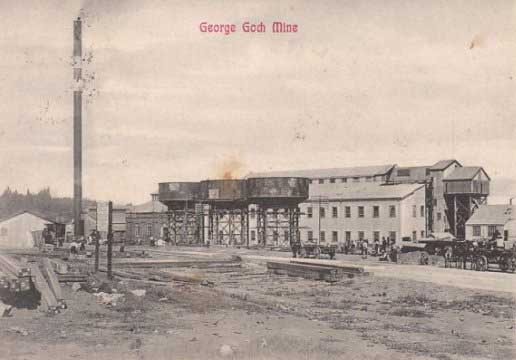
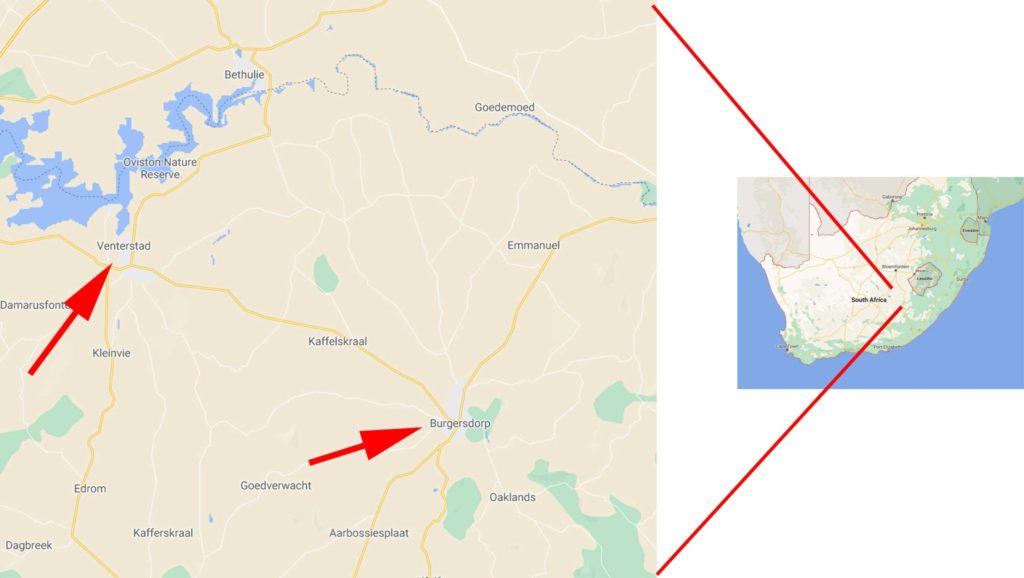
We stayed in Johannesburg at the Cornucopia, for a few days, when my father started work at the George Goch, to sink a shaft, which was partly down, in the centre of an old slimes dam, and then was about 300 feet of sand to go through which was very wet. Well my father warned the Mine Captain that, the length of the setts, which were six feet, ought to be reduced to three feet in this quicksand, otherwise the shaft would collapse, as the sand was simply running away from the back of the timber.
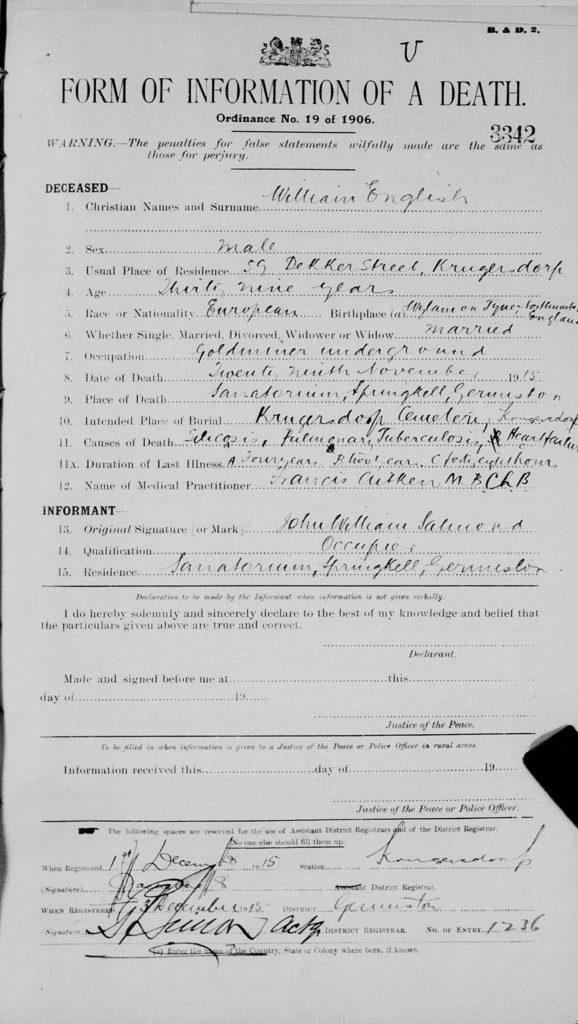
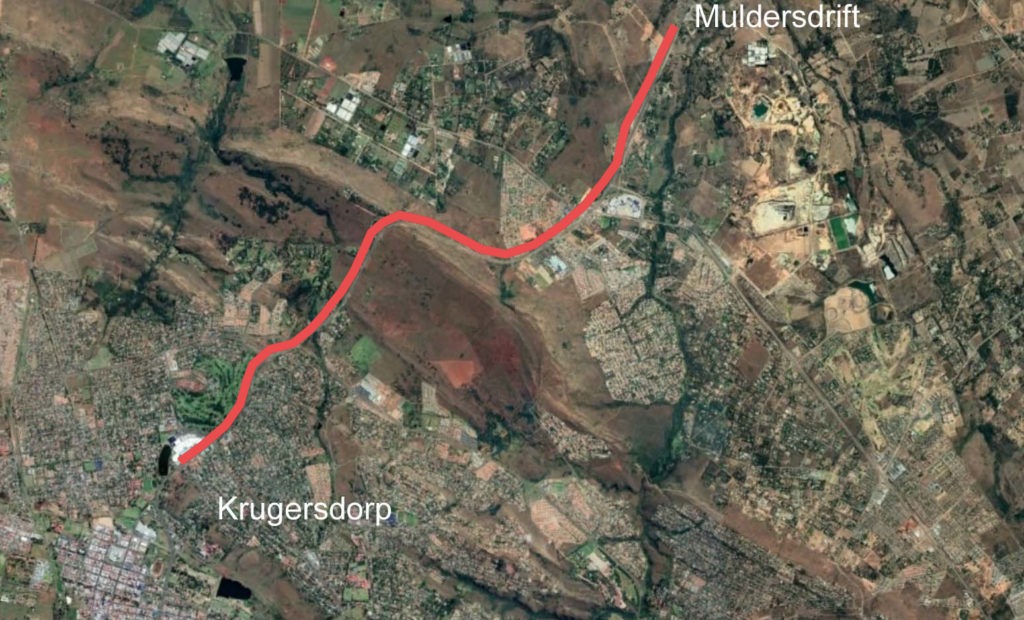
No notice was taken, untill one day a hanging bolt broke and the whole shaft, except the top 20 or 30 feet, twisted round right round, showing that there was nothing at the back of the timber. My father left at once, and we went out to Krugersdorp on the West Rand.
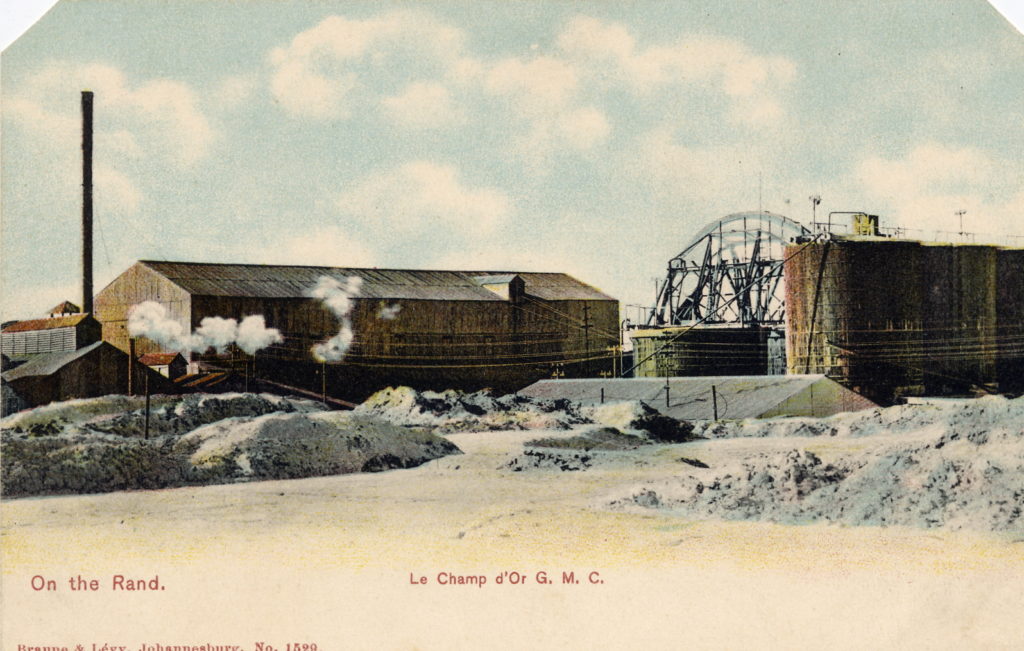
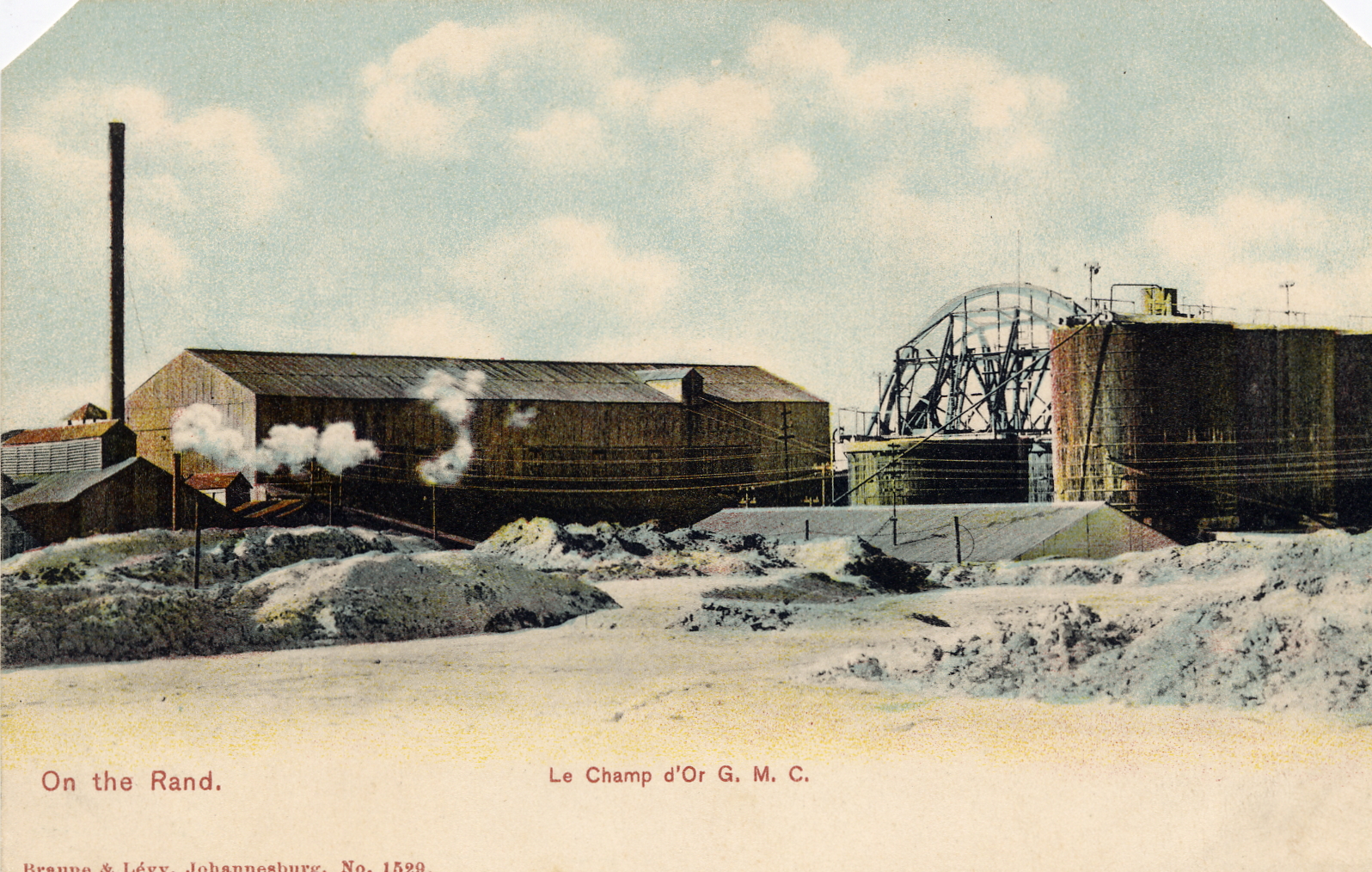
There he started work at Champ D’Or
PAGE 13
1897
to get along with. I received my blasting certificate 18th May and worked here six weeks when my father sent for me to go to at Champ D’Or to work.
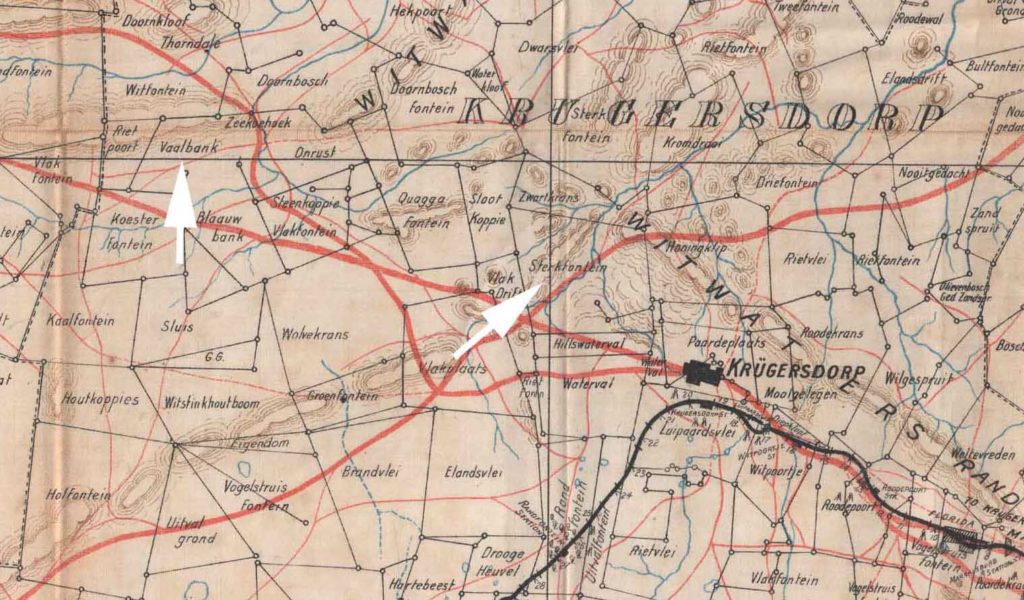
There was no railway to Randfontein. I moved to Champ D’Or into a room with my father opposite the Goldsmiths bar, then a tin shanty, and started stoping with boys.
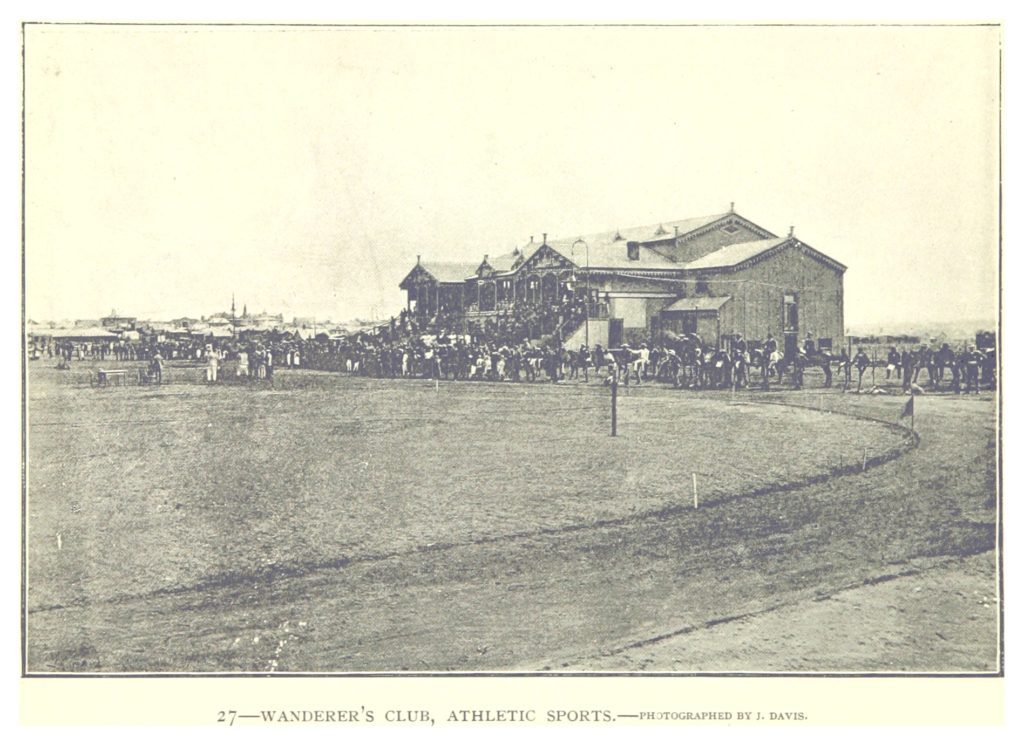
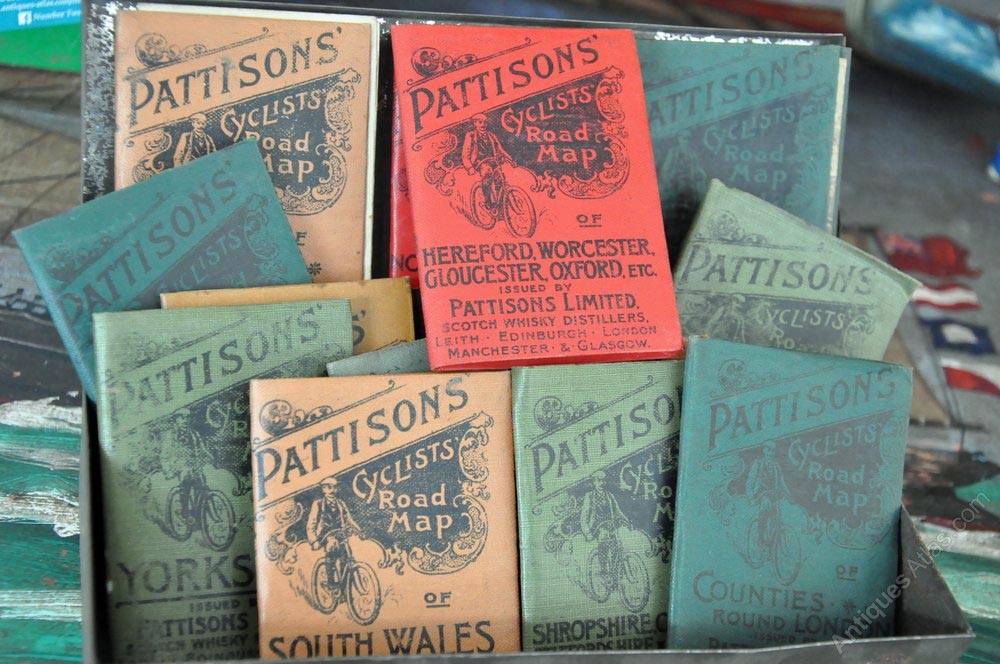
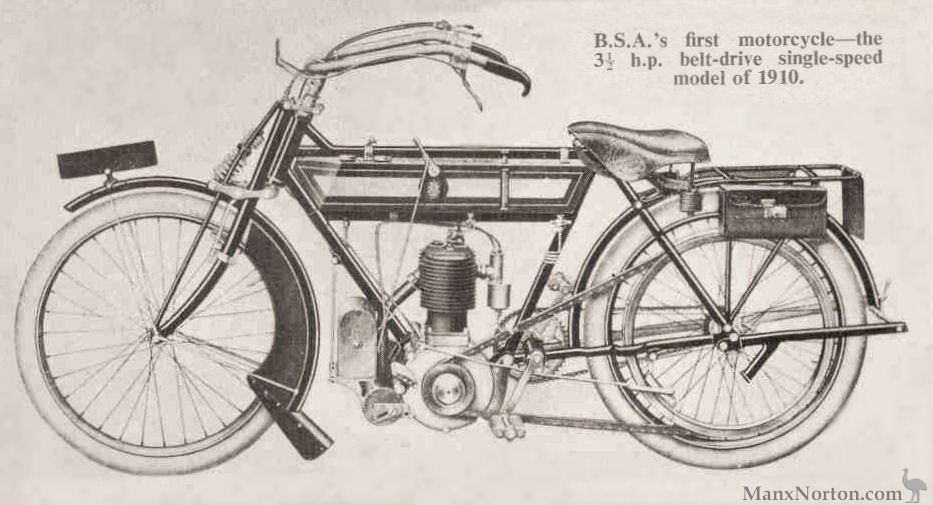
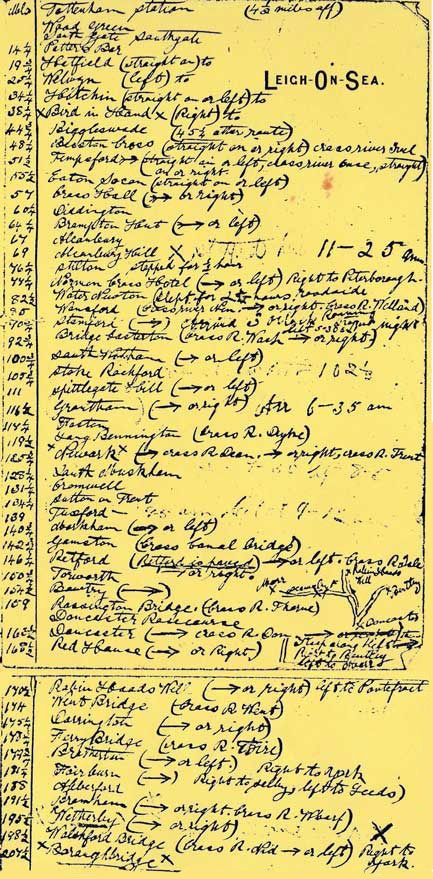
Before this whilst at Champ D’Or my father bought a second hand Humber roadster, on which I used to train, and on which I did some very good times.
PAGE 14
Father was extremely pleased with my riding and the time for the two laps, which he never told me.
PAGE 15
and slackened off as the bell rang for the last lap. I meandered around the track for the last lap, remembering that my father had told me never to look around whilst racing,
My father was wild that I had lost the heat,
PAGE 16
…named Little on scratch. The Driehoek track was banked very steeply at the ends, and my starting point was right on the steepest portion. It was really comical to an onlooker to see my father’s efforts to keep that machine upright but there was no fun for me in my anxiety lest I should fall and spoil the race.
won by half a lap. Pretty nearly all the workmen from Champ D’Or were there that day as my father had told them that nothing
PAGE 17
1898
could beat me in the mile, and as gambling was allowed then, they won lots of money _’You’ve done yourself this time’ he said when I got near enough to him. ’They’ll have you back on scratch just now. ‘Well’, I said, ‘You told me not to look round and I didn’t’. ‘Try and use a little discretion’ he answered. ‘All right’ says I. _
More admonishments re looking around etc. The men who were backing on me were alarmed at the turn of events, and thought that Little might beat me in the run off. (I forgot to say that 1st and 2nd in each heat rode in the final, that is how Little came to be in the final) but my father told them to put their train tickets on me.
PAGE 18
…lead from 50 to 100 yards, and my father seeing I was gaining, told me to ease off a little, and coached me to the end of the race, which I won by 70 yards.